
How to ensure consistent mixing in Dry Mix Concrete Batching Plants
In dry mix concrete batching plants, consistent mixing is the foundation of product quality. Unlike wet mix systems, dry mix plants rely heavily on downstream transport trucks or central mixers, which means any inconsistency in batching directly impacts strength, workability, and durability of the final concrete. Achieving uniformity requires precise control of materials, equipment performance, and operational discipline.
Below is a comprehensive guide to ensuring stable and consistent mixing performance in dry mix concrete batching plants.
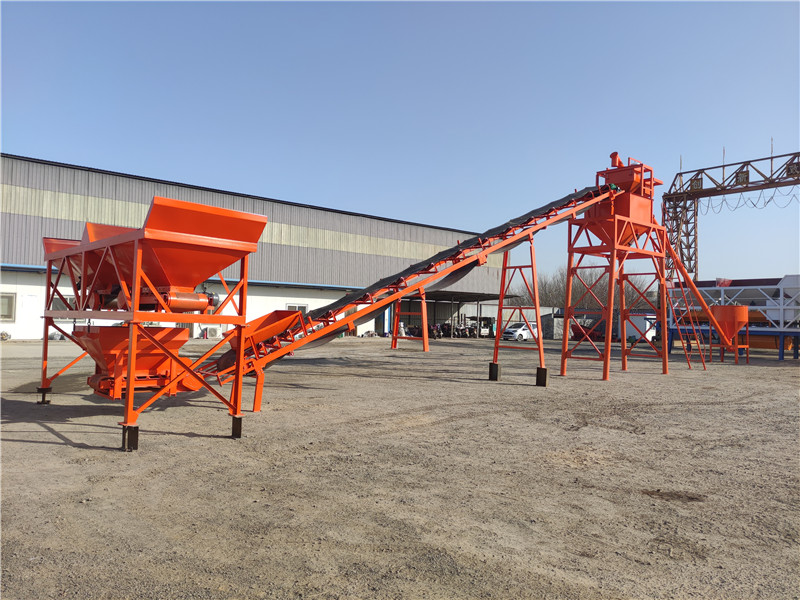
How to Ensure Consistent Mixing in Dry Mix Concrete Batching Plants
1. Understand the Dry Mix Process First
In a dry mix batching plant, aggregates, cement, fly ash, and additives are weighed and discharged into a transit mixer truck without adding water at the plant stage. Water is added later in the mixing drum during transportation or at the job site.
This structure makes consistency dependent on:
Accurate weighing
Homogeneous dry blending
Controlled discharge sequence
Reliable material flow
Even small deviations in dry mixing can lead to segregation or uneven hydration later.
2. Accurate Weighing System Calibration
Why it matters
Inconsistent batching almost always begins with inaccurate weighing.
Best practices
Calibrate load cells regularly (cement, aggregates, additives)
Use high-precision sensors with low drift rates
Implement automatic zero-point correction
Schedule weekly verification using standard weights
Key insight
A 1–2% error in cement dosing can significantly affect compressive strength and durability.
3. Optimize Aggregate Storage and Feeding
Common problem
Moisture variation and segregation in aggregate bins cause inconsistent batch ratios.
Solutions
Use properly partitioned cold aggregate bins
Install vibration systems to prevent arching
Ensure consistent feeder speed (belt or gate-controlled)
Avoid overfilling bins that cause material blending errors
Additional tip
Maintain uniform moisture content in aggregates even in dry mix systems, as it affects flow and weighing accuracy.
4. Ensure Uniform Material Flow in the Mixer
Even in dry batching plants, the mixing chamber or twin-shaft mixer plays a critical role.
To improve consistency:
Maintain paddle and liner condition
Replace worn mixing blades promptly
Ensure even distribution of materials inside the mixer
Avoid overloading the mixer beyond rated capacity
A worn mixer can cause dead zones where material is not properly blended.
5. Control Discharge Sequence Precisely
The order in which materials are discharged impacts homogeneity.
Recommended sequence:
Coarse aggregates
Fine aggregates
Cementitious materials
Additives
Why sequence matters
Proper layering reduces dust loss and ensures even distribution before blending begins.
6. Use Automated Control Systems
Modern PLC-based control systems significantly improve batching consistency.
Benefits:
Eliminates manual weighing errors
Provides real-time correction
Stores recipe data for repeatability
Tracks batch history for quality control
Advanced feature to consider:
AI-based batching optimization systems can adjust feed rates based on historical deviations.
7. Prevent Material Segregation During Transfer
Material separation during transfer is a major cause of inconsistency.
Preventive measures:
Use anti-segregation chute designs
Maintain moderate drop heights
Ensure smooth conveyor transitions
Avoid excessive vibration during discharge
8. Maintain Cement and Additive Handling Systems
Cement is highly sensitive to humidity and flow resistance.
Key actions:
Use sealed silos with proper aeration systems
Prevent clogging in screw conveyors
Install dust filters to avoid pressure imbalance
Regularly inspect pneumatic conveying lines
Poor cement flow leads to uneven mixing ratios even if weighing is correct.
9. Standardize Mixing Time and Drum Speed
Inconsistent mixing time leads to non-uniform batching results.
Recommendations:
Set fixed mixing cycles per batch
Optimize drum rotation speed based on material type
Avoid operator-dependent timing adjustments
Test different mix durations for different grades
Consistency in time = consistency in concrete performance.
10. Implement Moisture and Environmental Monitoring
Even in dry mix plants, environmental conditions matter.
Influencing factors:
Humidity affects cement flowability
Temperature impacts material behavior
Rain exposure causes aggregate variation
Solutions:
Install moisture sensors in aggregate bins
Cover storage areas properly
Adjust batching parameters seasonally
11. Regular Maintenance of Key Components
Equipment wear directly affects batching accuracy.
Focus areas:
Load cells and weighing hoppers
Conveyor belts and motors
Mixing blades and liners
Pneumatic valves and air systems
Preventive maintenance reduces long-term variation in output quality.
12. Operator Training and Standard Operating Procedures (SOP)
Even with automation, human factors still matter.
Training should cover:
Equipment calibration procedures
Emergency handling of batching errors
Proper startup and shutdown sequences
Quality inspection standards
A well-trained operator ensures system consistency is maintained daily.
Conclusion
Ensuring consistent mixing in dry mix concrete batching plants is not dependent on a single factor—it is the result of a tightly controlled system involving precise weighing, stable material flow, reliable automation, and disciplined operations.
Plants that integrate automation, preventive maintenance, and standardized processes consistently produce higher-quality concrete with fewer defects and reduced material waste.
If the system is well-optimized, dry mix batching can achieve performance levels comparable to fully wet mixing plants while maintaining higher flexibility and efficiency.