
A Complete Guide to Mobile Concrete Batching Plants: Functions, Types, Capacity and On-Site Advantages
Understanding the Mobile Concrete Batching Plant
A mobile concrete batching plant — sometimes called a portable concrete plant — is a facility that combines the various raw materials needed to produce concrete. These materials normally include water, entrained air, cement, aggregates (such as sand, gravel or crushed stone), and admixtures (chemical agents used to modify concrete properties). Unlike fixed plants, a mobile concrete plant is engineered for easy relocation, allowing concrete to be produced directly at different job sites and providing both flexibility and operational efficiency.
A mobile concrete batching plant is specialized construction equipment used for on-site batching and mixing of concrete. In contrast to stationary plants that remain at one fixed location, mobile plants are built to be transported, assembled and disassembled quickly so they can serve multiple projects in different places.
In fast-moving construction environments, mobility and efficiency are essential. Mobile batching plants deliver both, serving as versatile on-site concrete production units that simplify logistics and shorten supply chains. Below we examine key features and benefits, common components, transportation methods, and operational considerations.
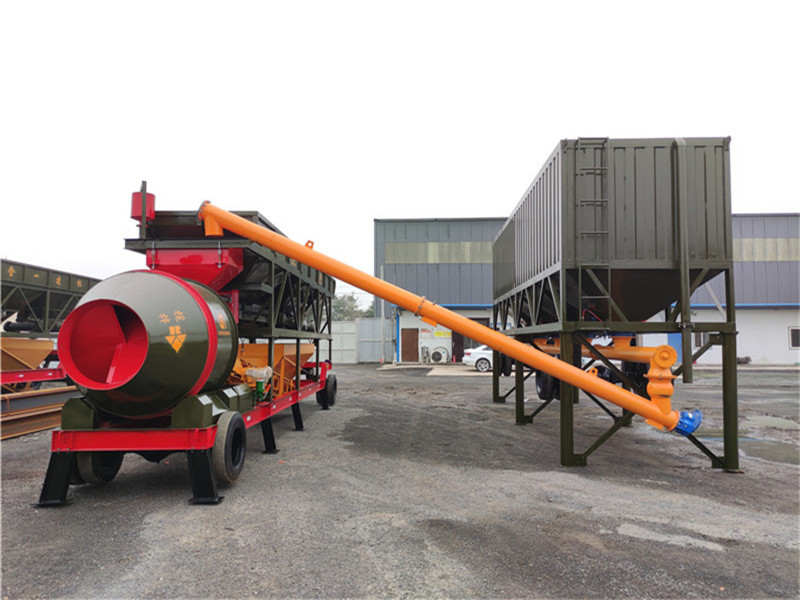
What components are typically used? What are their advantages and disadvantages? How are they moved from site to site?
Production Capacity
Production capacity describes how much concrete a mobile plant can produce over time, normally expressed in cubic meters per hour (m³/hr). For example, a plant with a capacity of 100 m³/hr can supply 100 cubic meters of concrete every hour, providing a continuous feed suitable for large-scale infrastructure, commercial developments and multi-unit residential projects. High hourly output helps reduce downtime and accelerates construction schedules.
Types of Mobile Concrete Plants
Dry Mix Mobile Plant
In dry mix systems, all ingredients except water are batched and mixed in dry form. Water is added later during transport to the placing location or at the site itself.
Wet Mix Mobile Plant
Wet mix plants combine all ingredients, including water, within the plant mixer. This approach generally yields a more uniform mix and is preferred when high-quality, highly consistent concrete is required.
Main Structure of a Mobile Concrete Batching Plant
Mobile batching plants share many elements with stationary plants. Typical subsystems include:
Aggregate Bins: Separate storage compartments for different sizes and types of aggregates (sand, gravel, crushed stone). Hopper volume varies by plant capacity; for example, a mobile plant with a 60 m³ rating might have four aggregate hoppers sized 9 m³ each for a total of 36 m³, allowing the use of up to four different aggregate types.
Conveyor Belts: Conveyors move aggregates from storage bins to the mixer. Longer conveyors require more powerful motors and suitable electrical configuration to maintain continuous operation. Two conveyor types are commonly used: one for weighing aggregates and another for transferring weighed aggregates into the mixer.
Cement Silo: A sealed container that stores cement powder and supplies it to the batching system.
Mixer: The central unit where cement, aggregates, water and admixtures are blended. Twin-shaft mixers are widely used in mobile plants for their high output and better homogenization of the mix.
Control System: An integrated electronic control platform that monitors and controls batching sequences, mixing times, water dosing and other critical parameters.
Advantages of Mobile Concrete Plants
Mobile concrete plants provide several operational benefits:
High flexibility and mobility — they can be deployed where concrete is needed, reducing transit times.
Cost-effectiveness for projects requiring on-site production or frequent relocation.
Reduced need for permanent civil works and foundations at temporary sites.
Suitability for road construction, foundations, remote infrastructure, small-to-medium precast yards and projects with intermittent or multiple locations.
Disadvantages and Practical Constraints
While mobile plants bring many advantages, there are trade-offs to consider:
Limited Production Capacity: Mobile units usually have smaller maximum outputs than large stationary plants, which can be a limiting factor for very large-volume projects.
Higher Initial Investment for Advanced Units: Some mobile plants with advanced mobility features or higher automation may require a larger upfront outlay; for long-term, high-volume projects a stationary plant can become more cost-effective.
Dependence on Transportation: Mobility depends on trucks, trailers or towing vehicles. Challenging access, poor roads or rough terrain can complicate logistics. Models fitted with chassis, axles and tires offer smoother road transport and easier redeployment.
Setup and Dismantling Time: Although designed for fast assembly, each relocation requires labor and time for securing, leveling and commissioning, which must be scheduled into project timelines.
Stability and Durability Concerns: Repeated movement, exposure to weather and rough handling can increase wear; robust design and regular inspections are important. Extended warranties and reliable construction help mitigate these risks.
Space Requirements: Operating a mobile batching plant needs sufficient on-site space; tight or congested sites may restrict deployment.
Maintenance Complexity: Mobility introduces additional service items (wheels, axles, towing fittings) that need inspection and maintenance. Availability of spare parts and global serviceability should be verified when selecting a supplier.
Environmental Impact: Although on-site production can reduce transport emissions, plant operation generates noise, dust and local disturbance; effective dust control and noise mitigation are important for regulatory compliance and site neighbor relations.
Despite these limitations, mobile concrete batching plants remain highly valuable where on-site mixing, quick deployment and flexibility are required.
How to Move Mobile Batching Plants
Mobile batching plants are engineered for transport and redeployment in several common configurations:
Towable Trailer: Many mobile plants are mounted on trailers and can be towed by a truck to new locations. At the site, the trailer is stabilized and leveled for operation.
Built-in Axles and Wheels: Some units include integrated axles and wheels, enabling easier on-site repositioning using a towing vehicle or other site equipment.
Containerized Design: Certain mobile plants are housed within standard shipping containers for convenient transport by truck, rail or ship — ideal for international projects or remote locations.
Modular Construction: Plants built from prefabricated modules can be transported separately and assembled on-site, enabling rapid setup and dismantling.
These design approaches — trailers, chassis with axles, containerization and modular modules — provide the mobility that allows plants to be redeployed efficiently across projects.
What to Consider When Purchasing a Mobile Concrete Batching Plant
When evaluating mobile plants, consider the following factors:
Production Capacity: Choose capacity according to the project’s demand. Mobile models are available in various hourly output classes; for example, representative mobile models could include a 30 m³/hr unit, a 60 m³/hr unit, a 100 m³/hr unit and a 120 m³/hr unit.
Mobility & Transportability: Assess how easily the plant can be transported, set up and dismantled — review size, weight, built-in towing features and whether road permits or special transport equipment will be needed.
Quality of Components: Inspect the durability and reputation of critical components — the mixer, conveyors, aggregate hoppers and control system — and prioritize proven engineering and robust materials.
Mixing Performance: Evaluate mixing efficiency, consistency, mixing time and the plant’s capability to handle various aggregates and admixtures. Twin-shaft mixers typically yield good homogeneity at higher throughput.
Batching Accuracy: Accurate proportioning of aggregates, cement, water and admixtures is essential for consistent concrete quality. Verify the weighing and dosing precision of the control system.
Environmental Compliance: Consider dust control, noise levels and emissions. Select a plant whose dust filtration and noise mitigation meet local environmental regulations.
Maintenance & Support: Confirm the availability of spare parts, technical support and after-sales service. A strong support network minimizes downtime and keeps the plant operational.
Cost & Budget: Compare purchase price, transport, installation and ongoing operating costs. Balance initial investment against projected lifecycle value and total cost of ownership.
Customization Options: Determine whether the plant can be customized to meet specific project needs or if optional accessories (heating, additional sensors, extra hoppers) are available.
User-Friendly Design: Look for a straightforward control interface and ergonomic access for maintenance to simplify operation and reduce training time.