
What Industries Use Mobile Concrete Batching Plants Most?
Mobile concrete batching plants have become an important production solution for contractors, infrastructure companies, precast producers, and project developers that need reliable concrete output without building a permanent batching facility.
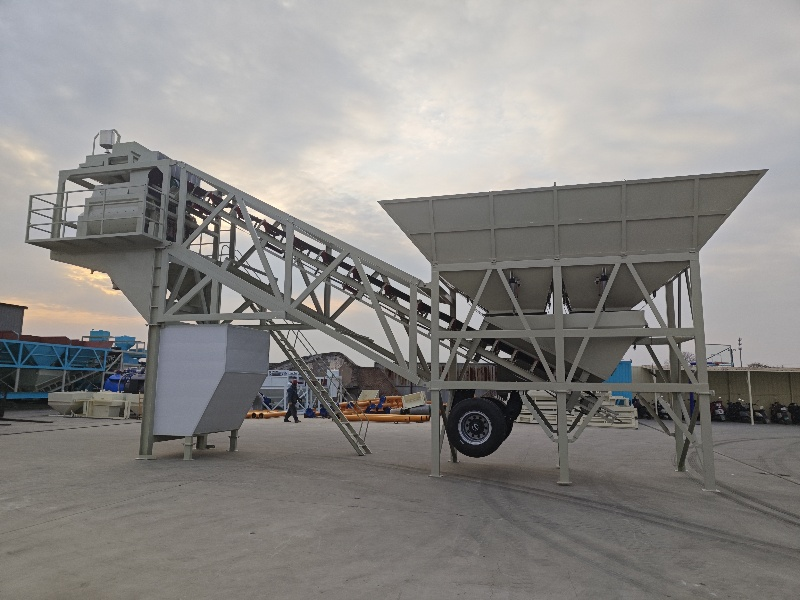
Unlike stationary batching plants, a mobile concrete batching plant integrates major components—such as aggregate batching, weighing, mixing, cement feeding, water supply, additive dosing, and control systems—into a transportable structure. This makes it particularly suitable for projects where construction sites change frequently, project durations are limited, or concrete needs to be produced close to the pouring location.
But which industries actually use mobile batching plants the most?
This article looks at the major industries, typical applications, and the reasons mobile concrete production is increasingly preferred for certain types of projects.
Why Are Mobile Concrete Batching Plants Used?
Before looking at individual industries, it helps to understand why contractors choose mobile plants instead of purchasing ready-mix concrete or installing a stationary concrete plant.
The main reasons include:
Fast installation and commissioning
Easy relocation between construction sites
Reduced concrete transportation distance
Better control over concrete quality
Flexible production capacity
Lower infrastructure requirements
Suitable for temporary and remote projects
Reduced dependence on external concrete suppliers
Better control of construction schedules
Ability to produce different concrete mix designs
For many projects, concrete must be poured continuously and within a limited time after mixing. If the project is far from an existing ready-mix concrete supplier, transportation time can negatively affect workability, consistency, and construction efficiency.
Installing a mobile batching plant directly at or near the project site can solve this problem.
1. Road and Highway Construction
Road construction is one of the most common applications for mobile concrete batching plants.
Highway projects often extend across long distances, and construction teams regularly move from one section of the project to another. Building a permanent concrete batching plant for every construction zone would be expensive and inefficient.
A mobile plant can instead be relocated as construction progresses.
Typical applications include:
Highway pavement construction
Expressway projects
Road foundations
Concrete barriers
Drainage structures
Culverts
Roadside infrastructure
Toll station construction
Service area construction
For large highway projects, concrete demand may remain high for several months while the actual pouring location gradually moves.
A mobile batching plant allows contractors to keep concrete production relatively close to the active construction area.
Why mobile plants work well for road projects
The biggest advantage is logistics.
Transporting concrete over long distances using mixer trucks increases fuel consumption and may create concrete consistency problems, especially in hot climates or congested areas.
Producing concrete closer to the construction site can reduce:
Transportation distance
Delivery delays
Truck requirements
Fuel costs
Concrete slump loss
For road contractors working on multiple projects every year, the same plant can also be dismantled and moved to the next project after completion.
2. Bridge Construction
Bridge construction frequently requires large quantities of structural concrete with strict quality requirements.
Mobile batching plants are widely used on bridge projects because contractors often need concrete production near the bridge foundation, pier, or deck construction area.
Concrete may be required for:
Bridge foundations
Pile caps
Bridge piers
Abutments
Bridge decks
Beams
Retaining structures
Approach slabs
Concrete quality is particularly important in bridge construction because structural components must meet specified strength, durability, and workability requirements.
An on-site batching plant allows contractors to control:
Aggregate proportions
Cement dosage
Water-cement ratio
Admixture dosage
Mixing time
Concrete discharge consistency
For large bridge projects in remote areas, mobile plants can also reduce dependence on third-party ready-mix suppliers.
3. Railway and High-Speed Rail Construction
Railway infrastructure projects often cover hundreds of kilometers, making mobile concrete production especially useful.
Concrete is required for many components throughout railway construction.
Common railway applications include:
Railway foundations
Viaducts
Bridges
Tunnel entrances
Retaining walls
Drainage systems
Railway stations
Concrete sleepers
Equipment foundations
High-speed railway projects can have particularly demanding concrete quality standards.
A reliable batching system helps maintain consistent mix proportions across repeated production cycles.
Why mobility matters
As railway construction advances, concrete demand moves along the route.
Instead of transporting concrete long distances from one central batching facility, contractors can relocate batching equipment closer to new construction sections.
This can improve construction efficiency while reducing concrete transportation requirements.
4. Airport Construction
Airport infrastructure projects can consume extremely large quantities of concrete.
Mobile batching plants may be installed directly inside or near airport construction zones to supply concrete for different sections of the project.
Typical applications include:
Runways
Taxiways
Aircraft parking aprons
Airport terminals
Maintenance facilities
Drainage systems
Equipment foundations
Airport access roads
Runways and aprons require durable concrete capable of handling heavy aircraft loads and repeated traffic.
Consistent batching is therefore important.
For temporary airport expansion projects, mobile plants offer an additional advantage: the equipment can be removed or relocated after construction without leaving a large permanent batching facility.
5. Dam and Hydropower Construction
Hydropower and dam projects are often located in mountainous or remote regions where access to commercial ready-mix concrete is limited.
For this reason, on-site concrete production is frequently necessary.
Mobile or modular concrete batching plants may be used for:
Dam foundations
Spillways
Powerhouse structures
Water diversion structures
Retaining walls
Access roads
Equipment foundations
Auxiliary structures
Concrete consumption can be significant, particularly for large civil engineering projects.
Producing concrete close to the construction location reduces dependence on long-distance transportation.
Important considerations for hydropower projects
Concrete batching systems used in these projects may need to handle:
Large aggregate sizes
Continuous production
Multiple concrete recipes
High-volume concrete demand
Remote operating conditions
Depending on project requirements, contractors may select either mobile, modular, or large stationary batching systems.
6. Remote Construction Projects
One of the strongest applications for mobile concrete batching plants is remote construction.
Some projects are located far from cities or industrial areas where commercial concrete suppliers operate.
Examples include:
Mining sites
Desert infrastructure projects
Mountain construction
Island projects
Oilfield infrastructure
Remote power stations
Border infrastructure
Rural road construction
Transporting fresh concrete hundreds of kilometers is generally impractical.
Instead, contractors transport raw materials such as:
Cement
Sand
Aggregate
Water
Chemical admixtures
Concrete is then produced directly on the project site.
This gives contractors greater independence from local ready-mix suppliers.
7. Mining Industry
Mining operations require large amounts of concrete for infrastructure construction and equipment foundations.
Mobile batching plants are particularly useful because many mining sites are far from established urban infrastructure.
Concrete may be used for:
Crusher foundations
Conveyor foundations
Processing plant foundations
Mine roads
Retaining structures
Worker facilities
Workshops
Equipment platforms
Tailings facilities
Mining companies frequently develop new areas as production expands.
A relocatable batching plant can therefore support different construction zones throughout the lifecycle of the mine.
Advantages for mining projects
An on-site plant allows operators to maintain concrete supply even when the nearest ready-mix supplier is far away.
It can also support emergency construction and expansion projects without depending entirely on external suppliers.
8. Oil and Gas Construction
Oil and gas projects frequently take place in remote regions where infrastructure is limited.
Concrete is required for a wide range of facilities.
Typical applications include:
Oilfield equipment foundations
Pipeline stations
Compressor stations
Storage tank foundations
Processing facilities
Worker camps
Access roads
Utility structures
Mobile concrete batching plants allow EPC contractors to establish temporary concrete production close to the construction area.
This is particularly valuable in desert regions, remote industrial zones, and large energy development projects.
9. Wind Farm Construction
Wind energy projects are another major application for mobile batching technology.
Wind turbines require very large reinforced concrete foundations capable of supporting heavy tower structures and resisting dynamic wind loads.
For large wind farms, dozens or even hundreds of foundations may need to be constructed.
Typical concrete applications include:
Wind turbine foundations
Transformer foundations
Substation structures
Internal roads
Equipment pads
Wind farms are often spread across large rural or mountainous areas.
A mobile batching plant allows contractors to produce concrete near clusters of turbine foundations and relocate the system when required.
This can significantly reduce ready-mix truck travel distances.
10. Solar Power Plant Construction
Utility-scale solar farms also require considerable civil construction work.
Although concrete consumption per structure may be lower than in wind energy projects, large solar developments can cover extensive areas.
Concrete may be required for:
Equipment foundations
Transformer pads
Substations
Control buildings
Inverter stations
Drainage structures
Access roads
For large projects located far from existing concrete plants, mobile batching equipment can provide a dependable on-site concrete supply.
11. Industrial Plant Construction
Large factories, processing plants, logistics centers, and industrial parks require significant quantities of concrete during construction.
Applications can include:
Factory foundations
Industrial floors
Machine foundations
Warehouses
Retaining walls
Utility facilities
Roads
Drainage infrastructure
EPC contractors may install a mobile batching plant for the duration of the construction project.
After completion, the plant can be moved to another project rather than remaining permanently on the site.
This can improve equipment utilization for contractors that manage multiple projects.
12. Port and Marine Infrastructure
Port construction can require large volumes of high-strength and durable concrete.
Typical applications include:
Port terminals
Container yards
Quay structures
Marine foundations
Warehouses
Access roads
Breakwater structures
Equipment foundations
Marine environments can require concrete with specific durability characteristics, including resistance to chloride exposure.
On-site batching gives contractors greater control over concrete mix design and production quality.
13. Urban Infrastructure Construction
Mobile batching plants are also used for municipal and urban infrastructure projects.
These projects may include:
Metro construction
Sewage systems
Water treatment facilities
Underground utility tunnels
Urban bridges
Road reconstruction
Drainage systems
Public infrastructure
Compact mobile plants can be particularly useful where space is limited.
However, environmental requirements such as dust control, noise reduction, and wastewater management should be considered when operating near populated areas.
14. Temporary Ready-Mix Concrete Production
Some concrete producers use mobile batching plants to establish temporary production capacity.
For example, a ready-mix supplier may win a contract for a large infrastructure project located far from its permanent batching facility.
Instead of delivering concrete over long distances, the company can install a mobile plant near the project.
This model is common for:
Major construction contracts
Remote developments
Temporary industrial projects
Infrastructure projects
High-volume construction sites
When the contract ends, the plant can be relocated to another market.
15. Precast Concrete Projects
Although permanent precast factories usually rely on stationary batching systems, mobile batching plants can still be useful for temporary precast production.
Examples include:
Precast beams
Concrete blocks
Road barriers
Drainage components
Utility structures
Temporary precast yards
Contractors may establish a temporary precast production facility near a large infrastructure project.
Producing precast elements near the installation area can reduce transportation costs for heavy concrete components.
Which Industries Use Mobile Concrete Batching Plants the Most?
Although mobile plants serve many industries, some sectors use them more frequently than others.
| Industry | Typical Concrete Demand | Why Mobile Batching Is Useful |
|---|---|---|
| Road & Highway | High | Construction locations continuously move |
| Bridge Construction | High | Reliable structural concrete needed near site |
| Railway | High | Long-distance projects require flexible production |
| Airport Construction | Very High | Large pavement concrete demand |
| Mining | Medium–High | Projects often located in remote areas |
| Wind Energy | High | Multiple foundations spread across large areas |
| Hydropower | Very High | Remote locations and large concrete demand |
| Oil & Gas | Medium–High | Temporary remote construction |
| Industrial Construction | High | Large but project-based concrete consumption |
| Ready-Mix Concrete | Variable | Temporary local production capacity |
In practice, road construction, railway projects, bridge construction, mining, energy infrastructure, and remote civil engineering projects are among the strongest markets for mobile concrete batching plants.
Mobile vs. Stationary Concrete Batching Plants
Choosing between mobile and stationary batching equipment depends largely on project duration and concrete production requirements.
Mobile batching plants are usually better when:
The project is temporary
Construction sites change frequently
Concrete must be produced near the pouring location
Installation time must be minimized
Civil foundation requirements need to be reduced
Equipment will be reused on future projects
Stationary batching plants are usually better when:
Concrete production will continue for many years
Very high production capacity is required
The plant serves a permanent ready-mix market
Large aggregate storage systems are necessary
Frequent relocation is unnecessary
Neither design is automatically better. The correct solution depends on the project operating model.
How to Choose a Mobile Concrete Batching Plant
Different industries require different plant configurations. Buyers should therefore avoid selecting equipment based only on theoretical hourly capacity.
Several factors should be evaluated.
1. Required Production Capacity
Estimate both average and peak concrete demand.
Typical project requirements may range from relatively small mobile plants to high-capacity systems producing large quantities of concrete every hour.
Production capacity should match actual pouring requirements rather than simply selecting the largest available model.
2. Concrete Type
Determine what concrete recipes will be produced.
Examples include:
Ordinary structural concrete
High-strength concrete
Pavement concrete
Roller-compacted concrete
Fiber-reinforced concrete
Specialized infrastructure concrete
Mixer configuration and batching accuracy may vary depending on the application.
3. Project Duration
A short construction project may benefit significantly from highly mobile equipment.
For longer projects, semi-mobile or modular batching plants may provide a better balance between relocation capability and production capacity.
4. Transportation Requirements
Buyers should check:
Trailer dimensions
Shipping container requirements
Maximum transport height
Equipment weight
Number of transport units
Crane requirements
A plant that is technically mobile but requires complicated disassembly may still involve significant relocation costs.
5. Aggregate Storage Capacity
Aggregate storage requirements depend on production volume and site logistics.
Remote construction sites may require larger storage capacity because aggregate deliveries may not be frequent.
6. Cement Storage
Cement silos are normally selected separately based on daily production requirements and cement delivery schedules.
Multiple silos may also be required when different cement types or mineral additives are used.
7. Weighing Accuracy
Reliable concrete production depends on accurate weighing of:
Aggregate
Cement
Water
Mineral additives
Chemical admixtures
Higher batching accuracy helps maintain consistent concrete performance.
8. Automation Level
Modern batching plants commonly use PLC-based automatic control systems.
Useful functions may include:
Recipe management
Automatic weighing
Production records
Alarm monitoring
Manual operating mode
Batch reporting
For contractors handling multiple concrete grades, recipe storage can improve operating efficiency.
What Capacity Mobile Concrete Batching Plant Do You Need?
Plant capacity should be selected according to actual site demand.
As a general project-planning framework:
Small to medium projects
Suitable for:
Rural roads
Small bridges
Building projects
Municipal construction
A compact mobile plant may provide sufficient capacity while remaining easy to relocate.
Medium to large infrastructure projects
Suitable for:
Highways
Large bridges
Industrial plants
Wind farms
Railway construction
These projects normally require higher-capacity batching systems capable of supporting continuous concrete pouring.
Large-scale concrete production
Projects such as:
Airports
Large dams
Major railway infrastructure
Large industrial developments
may require larger mobile, modular, or stationary batching systems depending on total concrete demand.
The key is calculating expected cubic meters of concrete per hour rather than choosing capacity based only on project size.
Advantages of Producing Concrete Directly on Site
For many industries, the strongest reason for purchasing a mobile batching plant is greater control over concrete supply.
On-site production can provide several operational benefits.
Shorter transportation distance
Concrete can be delivered quickly from the batching plant to the pouring area.
Better schedule control
Construction teams are less dependent on external ready-mix delivery schedules.
Consistent concrete mix
Operators can control batching recipes and material proportions.
Reduced transportation costs
Shorter truck travel distances may reduce fuel and logistics expenses.
Flexible project deployment
After one project finishes, equipment can be moved to another construction site.
These advantages become particularly important for contractors operating in remote or rapidly changing construction environments.
Frequently Asked Questions
What is a mobile concrete batching plant?
A mobile concrete batching plant is a transportable concrete production system that combines aggregate batching, weighing, mixing, cement supply, water dosing, admixture dosing, and control equipment in a mobile or modular structure.
What projects are mobile batching plants best suited for?
They are especially suitable for temporary, remote, and infrastructure projects such as highways, bridges, railways, mining developments, wind farms, airports, and industrial construction.
Can a mobile batching plant produce high-quality concrete?
Yes. Properly configured mobile plants can provide accurate weighing and controlled mixing similar to stationary plants. Concrete quality still depends on equipment configuration, raw materials, mix design, calibration, and operating procedures.
How quickly can a mobile concrete batching plant be installed?
Installation time depends on the plant design, site preparation, cement silo arrangement, utility connections, and local conditions. Mobile plants are generally designed to require less foundation work and shorter installation times than conventional stationary plants.
Can mobile batching plants be used for highway construction?
Yes. Highway and road projects are among the most common applications because construction locations frequently change and concrete must often be produced close to the paving area.
Are mobile concrete batching plants suitable for remote areas?
Yes. Remote projects are one of their strongest applications. Contractors can transport raw materials to the site and produce concrete locally rather than relying on distant ready-mix suppliers.
What mixer is commonly used in mobile batching plants?
Twin-shaft concrete mixers are widely used because of their mixing efficiency and suitability for many structural concrete applications. Other mixer configurations may also be selected depending on the concrete type and production requirements.
Conclusion
Mobile concrete batching plants are most widely used in industries where construction locations change, projects are temporary, concrete demand is significant, or ready-mix concrete suppliers are too far from the site.
Road construction, railway projects, bridge construction, mining, wind energy, hydropower, oil and gas infrastructure, airport construction, and large industrial projects are among the most common applications.
For contractors, the main value of a mobile batching plant is not simply mobility. It is the ability to establish reliable concrete production close to where concrete is actually needed.
When selecting a plant, buyers should carefully evaluate production capacity, project duration, concrete specifications, transportation requirements, aggregate storage, automation, weighing accuracy, and future relocation plans.
Choosing the right mobile concrete batching plant can help improve concrete supply reliability, reduce transportation dependency, and support more efficient project execution across multiple construction sites.