
Maintenance Tips to Extend Skip Hoist Concrete Batching Plant Lifespan
A Skip Hoist Concrete Batching Plant is widely used for small to medium-sized construction projects due to its compact structure, cost efficiency, and reliable performance. However, like any heavy-duty equipment, its long-term productivity depends heavily on systematic maintenance.
For contractors and plant owners, proper maintenance is not just about preventing breakdowns — it directly impacts production stability, concrete quality, operating costs, and overall return on investment.
This guide provides practical, long-term maintenance strategies to help you extend the lifespan of your Skip Hoist Concrete Batching Plant while maintaining optimal efficiency.
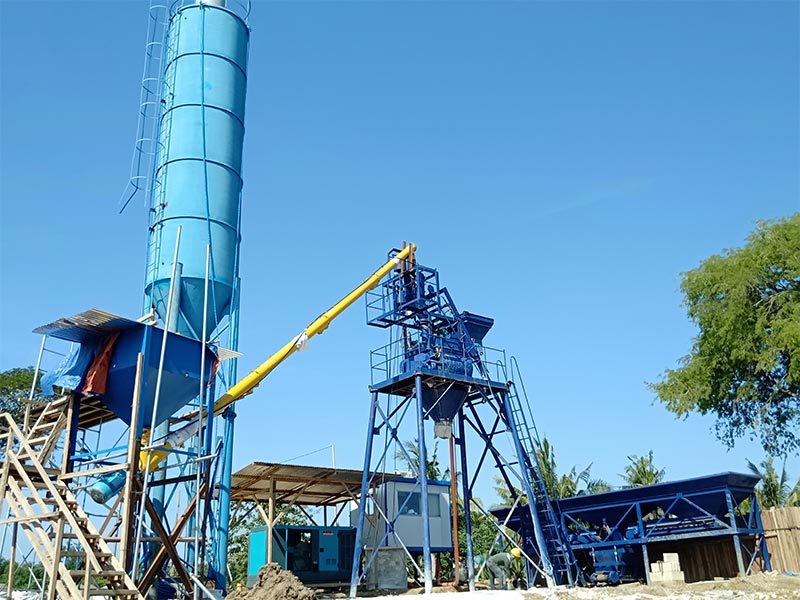
Why Maintenance Is Critical for a Skip Hoist Concrete Batching Plant
Compared with belt-type plants, a Skip Hoist Concrete Batching Plant relies heavily on:
The skip lifting mechanism
Wire ropes and guide rails
Hoist motor and braking system
Compact structural framework
Because the skip hoist system operates repeatedly under heavy load, wear and mechanical stress are inevitable. Without regular inspection and servicing, minor issues can quickly develop into major failures.
Proper maintenance helps:
Reduce unexpected downtime
Prevent structural damage
Improve batching accuracy
Lower long-term repair costs
Extend overall service life
1. Daily Inspection Checklist
Daily inspection is the foundation of plant longevity. Operators should complete basic checks before and after each shift.
Key Daily Inspection Points:
✔ Skip Hoist System
Check wire rope tension and surface wear
Inspect pulleys and guide rails for abnormal friction
Ensure smooth lifting and stable stopping
✔ Mixer Unit
Check mixing blades and liners for excessive wear
Remove hardened concrete buildup
Monitor unusual vibration or noise
✔ Weighing System
Verify load cell readings
Ensure weighing accuracy within tolerance
Clean aggregate and cement scales
✔ Electrical System
Inspect control cabinet for dust accumulation
Confirm sensor and limit switch operation
Check emergency stop functionality
Routine daily checks significantly reduce the risk of sudden shutdown.
2. Weekly Preventive Maintenance
Weekly maintenance focuses on lubrication and mechanical alignment.
Lubrication Is Essential
Apply appropriate industrial grease to:
Hoist bearings
Gearbox components
Pulley shafts
Mixer shaft bearings
Proper lubrication reduces friction, minimizes heat buildup, and extends component life.
Alignment Inspection
Check skip rail alignment
Inspect motor coupling alignment
Tighten loose bolts on structural frames
Misalignment is a common cause of premature wear in a Skip Hoist Concrete Batching Plant.
3. Monthly Structural and Mechanical Inspection
A monthly in-depth inspection should be conducted by technical staff.
Structural Frame
Inspect weld joints
Check for cracks or corrosion
Repaint exposed steel surfaces
Skip Bucket
Check for deformation
Inspect bottom plate thickness
Ensure discharge door sealing performance
Brake System
Test braking response
Adjust brake clearance if necessary
The hoist brake system is critical for operational safety and must never be neglected.
4. Mixer Maintenance Strategy
The mixer is the core of concrete quality.
Blade and Liner Replacement
Blades and liners are consumable parts. Replace them when wear exceeds manufacturer recommendations. Delayed replacement can:
Reduce mixing efficiency
Increase motor load
Lower concrete consistency
Shaft Seal Maintenance
Concrete slurry can damage shaft seals. Regular inspection prevents leakage and bearing contamination.
5. Electrical System Protection
Electrical failure is a major cause of downtime.
Best Practices:
Keep control panels sealed and clean
Avoid moisture exposure
Inspect PLC system regularly
Ensure stable voltage supply
Installing surge protection and grounding systems improves long-term electrical reliability.
6. Seasonal Maintenance Considerations
Although maintenance principles remain consistent year-round, climate conditions require adjustments.
In Cold Regions:
Prevent freezing of water pipelines
Use anti-freeze measures
Inspect hydraulic oil viscosity
In High-Temperature Areas:
Monitor motor temperature
Improve ventilation
Prevent overheating of control systems
Environmental adaptation extends the lifespan of your Skip Hoist Concrete Batching Plant.
7. Spare Parts Management for Long-Term Operation
Strategic spare parts planning prevents production delays.
Recommended Critical Spare Parts:
Wire ropes
Brake pads
Mixer blades
Load cells
Sensors
Bearings
Working with a reliable supplier ensures fast availability and quality assurance.
8. Common Problems and Preventive Solutions
Problem: Skip Hoist Jamming
Cause: Rail misalignment or debris buildup
Solution: Clean guide rails and check structural alignment
Problem: Inaccurate Batching
Cause: Load cell damage or calibration drift
Solution: Recalibrate or replace load cells
Problem: Excessive Vibration
Cause: Mixer imbalance or worn bearings
Solution: Replace bearings and rebalance mixer
Preventive action is always more cost-effective than emergency repair.
9. How Maintenance Impacts ROI
A well-maintained Skip Hoist Concrete Batching Plant can operate efficiently for 10–15 years or more.
Benefits include:
Lower energy consumption
Reduced repair frequency
Higher production stability
Better concrete quality consistency
Improved project reputation
Maintenance is not an expense — it is a long-term investment.