Knowledge Center
A SUPPLIER SPECIALIZING IN PROFESSIONAL CONSTRUCTION MACHINERY SOLUTIONS
What Is a Concrete Batching Plant and How Does It Work?
Nov. 16, 2026
Share :
Category: Industry Knowledge & Technical Guide / Construction Equipment
Target Audience: Civil Contractors, Concrete Producers, Project Managers & Equipment Buyers
Reading Time: 7–9 Minutes
Quick Summary: A concrete batching plant (also known as a concrete mixing plant) is an automated industrial system that precisely weighs, transports, and blends cement, water, sand, gravel, and admixtures into uniform structural concrete. This guide provides a detailed, step-by-step explanation of its core components, automated working principles, and precision batching process.
1. What Is a Concrete Batching Plant?
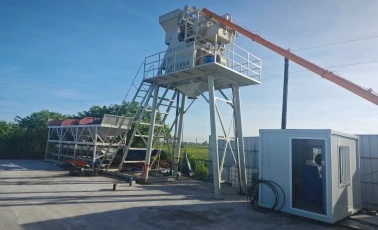
A concrete batching plant is a centralized manufacturing facility designed to produce fresh concrete in exact, repeatable proportions.
Instead of relying on imprecise volume-based manual mixing (using shovels, buckets, or wheelbarrows), a batching plant uses high-precision electronic load cells and automated industrial computer controllers (PLCs) to dose raw materials by gravimetric weight. This ensures that every single batch achieves the exact strength grade (e.g., C20, C30, C40, or high-performance C60 concrete) required by civil engineering codes.
2. The Core Components of a Concrete Batching Plant
Before examining how materials move through the plant, it helps to understand the key hardware systems:
|
Hardware System |
Primary Function |
Key Technical Highlights |
|
Aggregate Batching Machine (PLD Series) |
Stores, measures, and dispenses sand, gravel, and crushed rock. |
2 to 4 separate aggregate hoppers, pneumatic discharge cylinder gates, electronic load-cell scale belt. |
|
Material Feeding System |
Lifts batched aggregates from ground level up into the mixing tower. |
Inclined Belt Conveyor (fast, continuous) or Skip Hoist Bucket (compact, space-saving). |
|
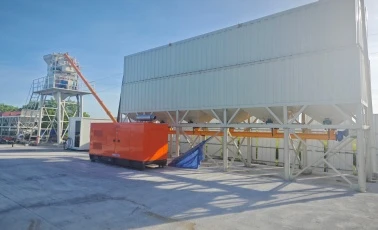
Cement Storage Silos |
Stores bulk dry powder (Portland cement, fly ash, slag, silica fume). |
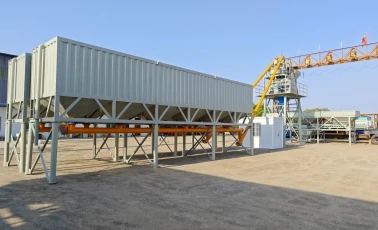
Vertical bolted silos (50–1000 T) or low-profile horizontal silos with pressure relief valves and level indicators. |
|
Screw Conveyors |
Feeds powder from the silo cone into the overhead cement scale. |
Heavy-duty spiral tubular conveyors with universal ball joints and intermediate support bearings. |
|
Electronic Weighing System |
Independently measures aggregates, cement, water, and chemical admixtures. |
High-precision shear-beam load cells delivering certified≤±1% accuracy. |
|
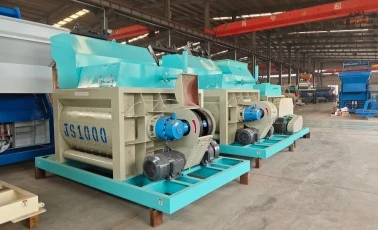
Twin-Shaft or Planetary Compulsory Mixer |
The "heart" of the plant; blends all dry and wet ingredients into homogeneous concrete. |
Dual counter-rotating shafts with high-chromium alloy blades (65+ HRC) and multi-layer floating seals. |
|
Intelligent PLC Control System |
Manages automated batching cycles, recipe storage, and production logging. |
Dual-screen industrial computer, real-time moisture compensation, and manual/auto dual operation. |
|
Pulse-Jet Dust Collector |
Captures airborne cement particles during tanker filling and batching cycles. |
Multi-cartridge PTFE air filters delivering clean air emissions (<10 mg/m3). |
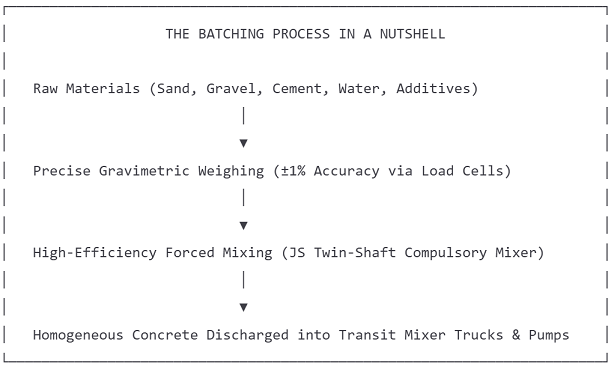
3. How Does a Concrete Batching Plant Work? (Step-by-Step Workflow)
The entire concrete production cycle is an automated, continuous process divided into 5 synchronized steps:

Step 1: Raw Material Proportioning and Gravimetric Weighing
Concrete quality depends entirely on weighing accuracy. Each raw material is weighed independently:
Aggregates (Sand and Crushed Stone): Front-end wheel loaders dump sand and stones into separate storage bins of the aggregate batcher. Driven by PLC instructions, pneumatic gates open sequentially, dropping specific weights onto a suspended weighing belt.
Cement and Fly Ash (Powder): Electric screw conveyors transport powder from the cement silos into an overhead suspended cement weighing hopper above the mixer.
Water: An electric booster pump meters water into a suspended stainless steel water weighing tank.
Liquid Admixtures: Chemical dosing pumps inject exact quantities of plasticizers or retarders into dedicated additive scales.
Step 2: Aggregate Conveying and Pre-Charging
Once the aggregates are weighed:
The scale belt starts and discharges the weighed aggregates into an inclined belt conveyor or a heavy-duty skip-hoist bucket.
The material is lifted upward into an aggregate holding hopper located directly above the twin-shaft mixer.
Why an intermediate holding hopper matters: Storing the aggregate charge above the mixer allows the ground-level scale to begin weighing the next batch immediately, ensuring non-stop continuous production.
Step 3: Intensive Forced Twin-Shaft or planetary Mixing
Once the mixer's hydraulic discharge door closes:
The aggregate holding hopper opens, dropping sand and stones into the mixing drum.
The cement scale butterfly valve opens, discharging powder through a flexible chute.
High-pressure water spray bars inject water evenly across the entire length of the drum, quickly wetting the dry mixture. Liquid admixtures are washed in simultaneously.
Inside the JS Twin-Shaft Compulsory Mixer, two synchronized, counter-rotating shafts equipped with multi-angle helical blades create intense three-dimensional turbulence.
In 45 to 60 seconds, all cement agglomerates are broken down and thoroughly dispersed around the aggregate stones, resulting in a completely uniform concrete matrix with zero dry pockets.
Step 4: Discharging Fresh Concrete
The mixer's bottom hydraulic discharge door opens.
The fresh concrete flows smoothly down the discharge chute directly into a concrete transit mixer truck, concrete pump hopper, or precast crane bucket.
Multi-limit switches allow the operator to adjust the discharge gate opening angle, controlling flow speed and preventing concrete splashing.
Step 5: Automatic Cycle Reset & Self-Cleaning
Once discharged, the mixer door closes, and the pre-weighed raw materials for the next batch are dropped in immediately.
High-pressure water rinsing nozzles clean the internal drum and mixing blades between production shifts, readying the plant for the next production run.
4. How the Intelligent Control System Guarantees Precision
The brain of a modern batching plant is its Automated Industrial PLC Control Cabinet:
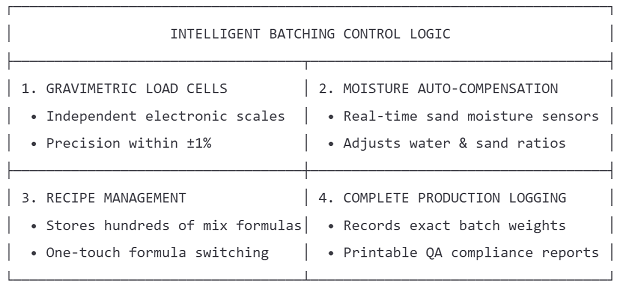
1.) Automatic Moisture Compensation: Sand absorbs rainwater on jobsites. Integrated microwave or high-frequency moisture sensors detect water content in sand and automatically reduce mixing water while adding extra sand weight in real time.
2). Anti-Overshoot Dosing Logic: The PLC uses two-stage (coarse and fine) gate opening. As the weight approaches the target limit, the gate throttles to a slow feed, compensating for "material in flight" to hit the exact target weight.
3). Digital Formula Storage: Operators can save hundreds of certified mix design recipes (from C15 lean concrete to C50 bridge mix) and switch formulas with a single click.
4). Data Traceability: The system logs every batch’s exact component weights, time, and truck number, providing verifiable records for engineering consultants.
5. Power Your Projects with Shengmao Machinery
Producing certified, high-strength concrete requires rugged equipment built with uncompromising mechanical and electrical precision.
Henan Shengmao Machinery Co., Ltd. is a global manufacturer of heavy-duty concrete equipment, trusted by contractors and ready-mix producers across over 90 countries:
Our Core Concrete Equipment Lineup:
Stationary Ready-Mix Plants (HZS25 – HZS240): 25 m3/h25 m3/h to 240 m3/h240 m3/h plants equipped with twin-shaft or planetary compulsory mixers and computer control system in English, French, Russian or Spanish.
Mobile Concrete Batching Plants (YHZS / YHZM/NYHZS Series): Fully integrated mobile chassis for rapid site setup with zero civil foundations.
Foundation-Free Concrete Plants (FHZS Series): Modular steel-frame plants eliminating civil foundation costs.
Storage & Transfer Systems: Bolted vertical cement silos (50–1000 T), horizontal low-profile silos, and automated bagged cement feeding systems.
Concrete Pumps: High-pressure crawler and trailer-mounted diesel concrete pumps 20–90 m3/h) with Euro V engine options.
Contact infromation:
Email: sales@shengmaomachine.com
Whatsapp/wechat: +8618703719962
CONTACT US
Get A Free Quote Instantly Online!
RELEVANT KNOWLEDGE

Obtain Free Product Quotations
Feel free to reach out for any queries. We would be happy to help!
View More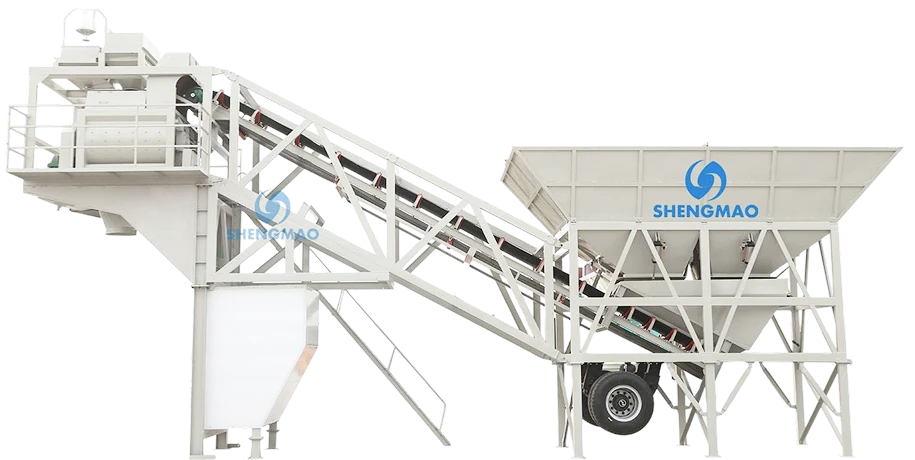


 Concrete Batching Plant