Concrete Batching Plant Guide
Mobile vs. Stationary Concrete Batching Plants | Comprehensive Engineering & Selection Guide
Nov. 24, 2026
Share :
Target Category: Concrete Batching Plant Technical Guide / Equipment Selection & Comparison
Target Audience: General Contractors, Commercial Ready-Mix Concrete (RMC) Suppliers, Infrastructure Project Directors, Bridge & Highway Engineers, Equipment Procurement Managers
1. Executive Summary & Core Verdict
Choosing between a Mobile Concrete Batching Plant and a Stationary Concrete Batching Plant is one of the most critical capital expenditure (CapEx) decisions for any construction contractor or commercial concrete enterprise.
Both plant architectures utilize computerized batching, precision electronic load cells, and compulsory twin-shaft or reversible drum mixers. However, they are engineered for fundamentally different operational lifecycles:
Core Comparison Summary at a Glance
|
Evaluation Dimension |
Mobile Batching Plants (YHZS / NYHZS / YHZM) |
Stationary Batching Plants (HZS Series) |
|
Primary Applications |
Linear & short-to-medium projects (Highways, bridges, airport runways, remote sites) |
Commercial RMC plants & mega projects (Ready-mix suppliers, multi-year infrastructure, dams) |
|
Rated Output Capacity |
20 – 120 m³/h (Single mobile chassis) |
25 – 240+ m³/h (Expandable dual-mixer lines up to 480 m³/h) |
|
Civil Foundation Required |
Zero Foundation (Foundation-free) or simple compacted flat pad |
Permanent Reinforced Concrete Pad & Deep Footings |
|
Setup & Commissioning |
1 to 3 Days (Pre-wired & pre-piped plug-and-play) |
10 to 25 Days (Structural tower & heavy crane erection) |
|
Relocation Flexibility |
Fast & Easy (Integrated trailer chassis with towing kingpin) |
Stationary (Requires complete modular disassembly) |
|
Ideal Project Duration |
3 Months to 2 Years per location |
3 to 10+ Years continuous fixed operation |
|
Key Economic Value |
Saves civil costs + rapid ROI on frequent site moves |
Lowest per-cubic operational cost for massive continuous volume |
Choose a Mobile Plant if: Your project spans along linear corridors (highways, railways, canals), requires relocation every few months, operates in remote areas, or sits on leased land where permanent civil construction is prohibited.
Choose a Stationary Plant if: You are establishing a permanent commercial Ready-Mix Concrete (RMC) business, producing massive continuous daily volume (>1,000 m³/day), requiring centralized multi-silo powder storage, or operating on a single job site for multiple years.
2. Structural & Architectural Differences
Understanding the fundamental structural divergence between mobile and stationary plants clarifies why each excels in its respective operating environment:
|
Structural Component |
Mobile Plant Architecture |
Stationary Plant Architecture |
|
Main Chassis Design |
Single integrated trailer chassis equipped with kingpin, road axles, tires, and folding legs |
Heavy-duty structural steel columns anchored to deep concrete foundations |
|
Aggregate Batching System |
Inline 2 to 4 bin PLD batcher mounted on the trailer frame |
Ground-level or in-ground 3 to 5 bin PLD batcher with concrete loading ramp |
|
Aggregate Transfer Method |
Integrated flat/chevron belt conveyor on chassis |
Compact Skip-Hoist Bucket (HZS25–75) OR Long Inclined Belt Conveyor (HZS60–240) |
|
Intermediate Storage |
Direct feeding or compact holding hopper |
High-capacity aggregate waiting hopper suspended above mixer for parallel batching |
|
Cement Silo Matching |
Skid-mounted horizontal ground silo OR low-profile mobile silo |
Multiple high-tonnage vertical bolted/welded silos (100T – 500T each) |
|
Control Cabin & Systems |
Climate-controlled operator cabin integrated directly onto the chassis |
Detached, elevated control room with panoramic view of plant and truck loading area |
3. Side-by-Side Technical Comparison Matrix
The table below breaks down the technical, operational, and commercial parameters of mobile and stationary concrete mixing plants:
|
Feature / Metric |
Mobile Batching Plants (YHZS / NYHZS / YHZM) |
Stationary Batching Plants (HZS Series) |
|
Rated Output Capacity |
20 – 100 m³/h |
25 – 240 m³/h (or twin-line up to 480 m³/h) |
|
Main Chassis Design |
Wheeled trailer chassis with towing kingpin & road axles |
Heavy-duty structural steel columns anchored to concrete |
|
Civil Foundation Work |
Zero foundation (NYHZS/YHZM) or simple level ground pad |
Deep civil excavation, reinforced concrete footings & ramps |
|
Foundation Cost |
Negligible (≤ 1,000–3,000) |
Substantial (10,000–40,000+ depending on size) |
|
Installation Time |
1 – 3 Days |
10 – 25 Days |
|
Aggregate Feeding System |
Integrated flat/chevron belt on chassis |
Skip-hoist bucket (compact) or enclosed belt conveyor (high output) |
|
Cement Silo Matching |
Skid-mounted horizontal ground silo or mobile vertical silo |
Multiple vertical bolted/welded silos (50T – 500T) |
|
Concrete Grade Capability |
C15 to C60+ (when equipped with JS Twin-Shaft) |
C15 to C80+ High-Performance & Special Mixes |
|
Footprint / Space Required |
Extremely compact; flexible inline layout |
Larger footprint; requires aggregate ramp & truck turning radius |
|
Relocation Cost & Effort |
Low; hooked to prime mover truck and towed |
High; requires full disassembly, heavy cranes & multiple flatbeds |
|
Primary Project Lifespan |
3 Months – 2 Years per location |
3 – 10+ Years continuous stationary operation |
4. Deep Dive: Mobile Concrete Batching Plants
A Mobile Concrete Batching Plant integrates the aggregate batching machine, weighing scales, belt conveyor, compulsory mixer, pneumatic valves, and computerized control cabin onto a heavy-duty wheeled chassis.
Mobile Plant Advantages & Limitations
|
Advantages (Pros) |
Limitations (Cons) |
|
• Rapid 1–3 Day Deployment: Pre-assembled, pre-wired, and pre-piped in factory |
• Capacity Ceiling: Max single-chassis capacity capped at approx. 120 m³/h |
|
• Zero or Minimal Civil Works: Sits on compacted ground without concrete footings |
• Compact Storage: Aggregate bins hold less raw material reserve than fixed plants |
|
• Low Relocation Costs: Towed directly between jobsites with minimal downtime |
• Tighter Maintenance Access: Integrated design has less interior walk space |
|
• On-Site Placement: Minimizes ready-mix truck haul distances and slump loss |
• Silo Limitations: Typically matches 1–2 cement silos rather than large silo banks |
|
• Ideal for Remote Sites: Perfect where civil foundation contractors are unavailable |
• Limited Dual-Mixer Options: Single mixer per mobile chassis |
Ideal Project Applications for Mobile Plants:
1). Highway, Expressway & Road Paving: Linear construction where the plant moves forward every 15–30 km to minimize truck transit cycles.
2). Bridge, Overpass & Culvert Construction: Medium-scale infrastructure demanding high-strength concrete placed directly on-site.
3). Airport Runway & Pavement Construction: High-speed concrete delivery directly to paving trains.
4). Rural Infrastructure & Dam Spillways: Remote jobsites where establishing civil foundations is cost-prohibitive.
5). Short-to-Medium Term Subcontracting: Projects lasting between 3 months and 18 months.
5. Deep Dive: Stationary Concrete Batching Plants
A Stationary Concrete Batching Plant (such as the standard HZS series) is anchored to permanent reinforced concrete foundations. It is optimized for heavy, continuous, high-volume production with maximum storage capacity and multi-lane delivery.
Stationary Plant Advantages & Limitations
|
Advantages (Pros) |
Limitations (Cons) |
|
• Massive Capacities: Continuous output from 25 m³/h up to 240 m³/h (or 480 m³/h dual-line) |
• High Civil Foundation Cost: Requires deep excavation and concrete rebar pads |
|
• Large Silo Banks: Connects 3 to 6 vertical silos (100T–500T each) for various cement/binder grades |
• Extended Setup Period: Takes 10 to 25 days for civil curing, assembly, and crane erection |
|
• High Aggregate Reserves: Ground batchers hold 60 m³ to 200 m³ of aggregate |
• High Relocation Cost: Relocation requires full structural disassembly and crane rental |
|
• Parallel Cycle Speed: Interim waiting hopper allows batching and mixing simultaneously |
• Permanent Site Required: Unsuitable for short-term leased land or frequent moves |
|
• Heavy-Duty Lifespan: Engineered for 10+ years of continuous high-volume production |
• Delivery Radius Constraints: Dependent on ready-mix truck transit range and traffic |
Ideal Project Applications for Stationary Plants:
1). Commercial Ready-Mix Concrete (RMC) Enterprises: Centralized concrete supply hubs serving urban construction within a 20–40 km radius.
2). Mega Hydroelectric Dams, Tunnels & Harbors: Massive multi-year projects requiring continuous concrete pours exceeding hundreds of thousands of cubic meters.
3). Precast Concrete Element Factories: Dedicated production lines for precast bridge beams, railway sleepers, hollow-core slabs, and pipes.
4). High-Rise Urban Development: Large-scale commercial real estate developments with multi-year construction cycles.
6. The 5-Point Decision Framework for Buyers
To determine which configuration delivers the highest return on investment (ROI), assess your project against these five key parameters:
|
Project Parameter |
Criteria for Mobile Plant (YHZS / NYHZS) |
Criteria for Stationary Plant (HZS) |
|
1. Project Duration |
Shorter duration: < 1.5 to 2 Years |
Long-term operation: > 2 to 10+ Years |
|
2. Hourly Output Demand |
Moderate demand: 20 to 90 m³/h |
High/Massive demand: 120 to 240+ m³/h |
|
3. Jobsite Relocation |
Relocates frequently between tenders |
Fixed location serving wide regional radius |
|
4. Land Ownership Status |
Leased or temporary land permit |
Owned industrial land or permanent RMC site |
|
5. Civil Foundation Feasibility |
Rocky/remote terrain or zero foundation permitted |
Full civil construction resources available |
7. CapEx, OpEx & Total Cost of Ownership (TCO) Comparison
|
Cost Category |
Mobile Batching Plant |
Stationary Batching Plant |
|
Initial Equipment CapEx |
Moderate |
Moderate to High (Scale & capacity dependent) |
|
Civil Foundation Expense |
Minimal to Zero (0–3,000) |
High (10,000–40,000+, 15%–25% of CapEx) |
|
Assembly & Crane Expenses |
Minimal (1–2 crane days) |
Substantial (4–8 crane days) |
|
Relocation & Moving Expense |
Fast & Low Cost (Towed directly) |
High Cost (Full disassembly & heavy transport) |
|
Maintenance & Wear Parts |
Standard twin-shaft wear cycle |
Standard twin-shaft wear cycle |
|
Transit Mixer Fuel & Fleet Cost |
Lower (Located directly adjacent to pour) |
Higher (Longer transit routes from central station) |
8. Summary Decision Matrix: Which Plant Should You Buy?
|
Equipment Series |
Rated Output |
Core Technology |
Best Suited Projects |
|
YHZM Series |
20 – 100 m³/h |
JZM Reversible Drum Mixer + Zero Foundation |
Rural road paving, canal lining, repair jobs, budget-focused builds |
|
NYHZS Series |
25 – 120 m³/h |
JS Twin-Shaft Mixer + Horizontal Silo (No Foundation) |
Urban RMC, bridges, tight jobsites, fast multi-site transitions |
|
YHZS Series |
25 – 120 m³/h |
JS Twin-Shaft Mixer + Trailer Chassis (4.1m Discharge) |
Expressways, railways, airport runways, heavy infrastructure |
|
HZS Skip-Hoist Series |
25 – 75 m³/h |
JS Twin-Shaft Mixer + Compact Skip Bucket |
Compact commercial RMC yards, precast component factories |
|
HZS Belt-Type Series |
60 – 240 m³/h |
JS Twin-Shaft Mixer + High-Speed Inclined Belt |
Commercial RMC mega-stations, high-output infrastructure, dams |
9. Frequently Asked Questions (FAQ)
Q1: Is the concrete quality produced by a mobile batching plant inferior to that of a stationary plant?
Answer: No. Concrete quality and compressive strength are determined by weighing precision and mixer shearing efficiency. When equipped with a JS series compulsory twin-shaft mixer and electronic load cells with computerized PLC batching (±1% cement/water, ±2% aggregate), a mobile plant produces concrete of identical structural grade (C20 to C60+) to a large stationary plant.
Q2: How long does it take to relocate a mobile batching plant from one site to another?
Answer: An integrated mobile plant (such as Shengmao’s YHZM/YHZS/NYHZS series) can be dismantled in 1 day, transported on a standard low-bed trailer or towed via kingpin in 1 day, and re-erected and calibrated on the new site in 1 to 2 days, achieving a complete transition in under 4 days.
Q3: Why are stationary batching plants preferred for very high capacities (120 – 240 m³/h)?
Answer: Plants producing over 120 m³/h require massive aggregate waiting hoppers, large dual-drive inclined belt conveyors, and high-rise mixing towers suspended high enough (4.1 m) for rapid continuous truck loading. These heavy structural loads exceed the dimensional and weight limits of highway trailer chassis.
Q4: Can a mobile concrete plant be upgraded or matched with multiple cement silos?
Answer: Yes. While standard mobile plants typically operate with one or two cement silos (50T – 100T horizontal or vertical), additional screw conveyors and electrical control channels can be configured to connect up to 3 or 4 silos for multi-binder formulations (cement, fly ash, slag powder).
Q5: What is the primary operational advantage of stationary belt-conveyor plants over skip-hoist plants?
Answer: Belt-conveyor stationary plants (such as HZS60, HZS90, HZS120, HZS180) utilize an interim aggregate waiting hopper above the mixer. This allows aggregate batching and mixer discharge cycles to run simultaneously in parallel, achieving significantly higher actual hourly output compared to sequential skip-hoist loading.
10. Partner with Henan Shengmao Machinery for Turnkey Concrete Solutions
With over 20 years of manufacturing excellence in Zhengzhou, China, Henan Shengmao Machinery Co., Ltd. delivers high-performance concrete production equipment tailored to global climate and project conditions.
Mobile Lineup: YHZM (Drum Type), NYHZS (100% Foundation-Free), and YHZS (Heavy-Duty Trailer Series).
Stationary Lineup: HZS25–HZS240 (Skip-Hoist and Inclined Belt Conveyor Plants).
Auxiliary Equipment: Bolted & Welded Vertical Silos, Skid-Mounted Horizontal Silos, Bagged Cement Feeding Systems, and Concrete Recycling Plants.
Contact Our Engineering Consultation Team:
Whatsapp/wechat: +8618703719962
Direct Sales Email: sales@shengmaomachinery.com
Custom 3D Site Layouts, Electrical Adaptations (50Hz / 60Hz), and Rapid Quotations Delivered within 24 Hours.
CONTACT US
Get A Free Quote Instantly Online!
RELEVANT KNOWLEDGE
Nov.16, 2026

Obtain Free Product Quotations
Feel free to reach out for any queries. We would be happy to help!
View More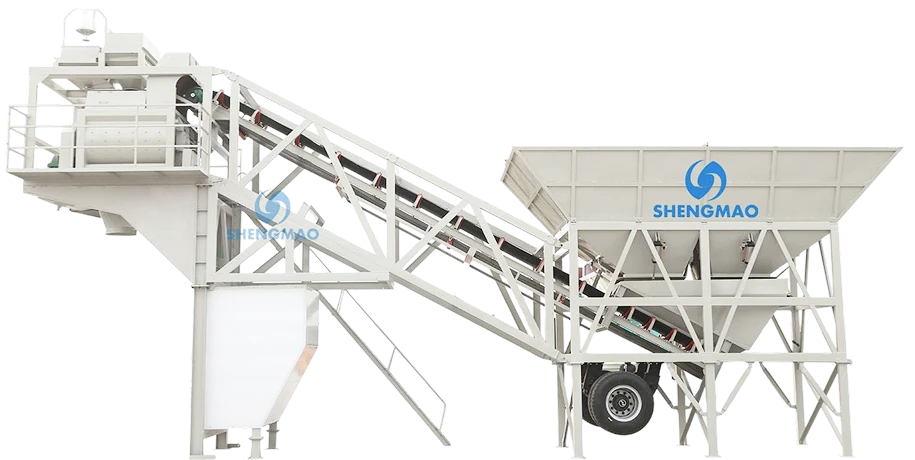


 Concrete Batching Plant